Leadership Beyond the Obvious: Why I Believe Human Capacity Building Is One of the Most Sustainable Ways to Transform Cancer Care in Africa
Throughout my years leading Merck Foundation across Africa, I have become convinced of one fundamental principle:
You cannot build a sustainable healthcare system without building its people first.
Hospitals are important. Equipment is important. Medicines are essential. Infrastructure matters.
But who will diagnose the patient?
Who will determine the treatment?
Who will operate the equipment?
Who will manage chemotherapy and its complications?
Who will provide palliative care and pain management when cure is no longer possible?
And who will train the next generation?
Without skilled, specialized healthcare professionals, even the best infrastructure, medicines and technology cannot create a sustainable cancer-care system.
This is why, through Merck Foundation, we chose a different path.
Africa’s Growing Cancer Challenge
The urgency of building cancer-care capacity in Africa becomes even clearer when we look at the scale of the challenge. According to the International Agency for Research on Cancer, Africa recorded approximately 1.19 million new cancer cases and 764,000 cancer deaths in 2022. Breast, cervical and prostate cancers were the three leading cancers by incidence across the continent.
But numbers alone do not explain the real challenge. Cancer patients in many African countries face a combination of late diagnosis, limited screening and diagnostic capacity, shortages of specialized healthcare professionals, inadequate referral pathways, geographical inequalities and limited access to treatment, palliative care and pain management. WHO has specifically identified shortages across the oncology workforce as a major obstacle to cancer care in Africa.
And the burden is growing. Population growth, ageing and changing patterns of disease mean that African health systems will need to manage substantially more cancer in the coming decades. In sub-Saharan Africa alone, projections have indicated that the cancer burden could approach 1.5 million new cases and 1 million deaths annually by 2040 if incidence rates remain unchanged.
There is also a profound inequality hidden behind these statistics. In lower-resource settings, having cancer does not necessarily mean having access to an oncologist. A specialist may not exist in the country at all, or the limited specialists available may be concentrated in the capital or a major city. WHO has highlighted these geographical inequalities as an important barrier to cancer care.
This is precisely why I have always believed that addressing Africa’s cancer challenge cannot begin and end with donating equipment, medicines or infrastructure. Before a healthcare system can sustainably deliver cancer care, it needs the human expertise to diagnose, treat, manage and follow up patients—and to provide appropriate palliative care and pain management when needed.
For us, therefore, investing in oncologists and multidisciplinary cancer-care teams was not simply an education program. It was an intervention at one of the most fundamental bottlenecks in the cancer-care system: the shortage and unequal distribution of specialized human capacity.
We Focused on What Was Missing: The Specialists
In many African countries where we started our programs, the shortage was not simply a shortage of resources. In some cases, there were no locally trained oncologists at all, or no adequately developed multidisciplinary cancer-care teams.
Through our scholarships, we supported the training of the first local oncologists in countries including Liberia, The Gambia, Burundi, Niger, the Central African Republic, and others, while significantly strengthening oncology capacity in countries such as Namibia, Zambia, Zimbabwe and Sierra Leone.
We also supported the development of specialists across the cancer-care continuum, including palliative care and pain management—disciplines that had been severely underdeveloped or, in some settings, almost nonexistent.
For me, this is what capacity building really means.
It is not about arriving with a temporary solution.
It is about helping a country develop the expertise to care for its own people.
A Scholarship Must Create a Specialist, Not Simply a Certificate
There is another important distinction that is sometimes overlooked when we talk about “medical training.”
A workshop is training.
A one-day seminar is training.
A week-long course is training.
They can all be useful. But they do not transform a general doctor into an oncologist.
Specialization requires something entirely different.
Our approach has therefore focused on substantial postgraduate and clinical specialty education: long-term clinical oncology training, multi-year master’s programs, and structured postgraduate oncology education through respected academic and clinical institutions, including training pathways in India, Egypt, the United Kingdom and elsewhere.
Some programs require a year or more of intensive clinical specialty training. Others extend for two or three years.
That difference matters enormously.
We are not simply increasing awareness of oncology. We are helping create oncologists.
And once that specialist returns home, the impact does not end with one scholarship.
That doctor can diagnose and treat patients for years. They can work within their country’s healthcare system. They can share expertise with colleagues. They can mentor younger doctors. And eventually, they can contribute to developing the next generation of specialists locally.
One scholarship can therefore become the beginning of an entire medical capacity.
In total Merck foundation provided till today more than 280 of one year , 2 year and 3 year scholarships of multidisciplinary cancer care for healthcare providers from 35 African countries nationwide. I consider this a transformation in cancer landscape in sub-sharan Africa.
The Capital City Cannot Be the Entire Healthcare System
But I also learned that simply increasing the number of specialists is not enough.
In countries where oncologists already existed, another inequality often appeared: geographical inequality.
Specialized doctors were frequently concentrated in the capital or one major city.
For a cancer patient living hundreds of kilometres away, theoretically having an oncologist somewhere in the country does not necessarily mean having access to oncology care.
This became another gap we deliberately worked to address.
Our capacity-building strategy has increasingly focused not only on how many specialists a country has, but also on where those specialists are needed.
We work with our partners to support doctors from different regions and institutions so that specialist knowledge can gradually extend beyond the capital—to secondary cities, regional hospitals and underserved populations.
Because national healthcare capacity should ultimately mean exactly that:
national.
This emphasizes the importance of our partnerships and / or collaborations with local Academia, medical societies , local governments , ministry of health , ministry of education , First Ladies and Presidents.
Imagine Cancer Without an Oncologist
For those living in countries with established cancer systems, it can be difficult to imagine what the absence of specialized care really means.
Imagine receiving a suspected cancer diagnosis in a country with no oncologist available to you.
Or imagine that the only specialist is hundreds of kilometers away.
If you are wealthy enough, perhaps you travel abroad.
But what happens if you cannot?
For too many families, historically, the choices have been painfully limited: delayed diagnosis, inadequate treatment, travelling enormous distances, attempting to seek treatment abroad—or living and dying without adequate cancer treatment and, sometimes, without appropriate pain management.
This is why training the first oncologist or the first palliative-care specialist in a country is not merely an educational achievement.
It changes what becomes possible for patients who previously had nowhere to go.
Why We Chose Capacity Building Over Dependency
There is an understandable attraction to donations.
Donation can be simpler and more convenient, particularly when an organization does not have the specialized skills, time, operational capacity, or appropriate resources required to design and manage complex, long-term programs such as healthcare capacity building.
A donated machine can be photographed.
A shipment of medicine can be counted and easily reported.
A new building can be inaugurated and celebrated.
Human capacity building is different. Its impact is less immediate and often much less visible in the beginning.
It can take one year, two years, three years or longer before the investment begins to show its full value. And it may take a decade or more before the significant impact of building an entire generation of specialists becomes truly visible.
For many, this may not be an attractive model. It requires patience and a willingness to invest today in results that others may celebrate years later. You may do much of the difficult groundwork while those who come after you witness—and perhaps even receive recognition for—the impact.
But this has never discouraged me or discouraged our partners.
Because when that doctor comes home with specialist expertise, the impact can continue for decades.
This is the philosophy behind our work.
Our primary contribution is not based on donating money to governments or partners, nor is our model centered on donating medicines, equipment or constructing infrastructure.
We invest in human capital.
We build specialized medical capacity that remains within countries and strengthens their healthcare systems from within.
Infrastructure may age.
Technology may become obsolete.
A supply of medicine will eventually be consumed or expired.
But knowledge can multiply.
We Made History—And We Are Still Making It
I do not use the phrase “making history” lightly.
But when you help a country develop its first locally trained oncologist, its first specialist in a field that previously did not exist, or its first structured cancer-care capacity, something has fundamentally changed.
There is a before and an after.
And when this happens across country after country, it becomes more than a scholarship program.
It becomes healthcare evolution , cancer care landscape transformation.
I am proud that Merck Foundation has made this long-term, specialized medical capacity building a defining pillar of our work across Africa and beyond.
Our goal was never to make countries dependent on us.
Quite the opposite.
The ultimate success of capacity building is that countries become less dependent on outside expertise because the expertise now exists at home.
That is sustainability to me.
And that is why I believe one of the most powerful contributions we can make to cancer care in Africa is not simply to bring treatment to a patient today.
It is to help build the doctors, specialists, nurses and multidisciplinary cancer care teams who will be there to care for that patient—and thousands more—tomorrow.
We did not want to temporarily fill a gap. We wanted to help countries build the expertise to close that gap themselves.
And this journey is far from finished.
Leadership Beyond the Obvious:
In my leadership articles, I often write about looking beyond the obvious, thinking in layers, resisting the attraction of quick wins, and making decisions whose real value may only become visible years later. Our approach to building cancer-care capacity across Africa is perhaps one of the clearest examples of this leadership philosophy in practice. For me, leadership has never been only about solving the problem in front of us today. It is about asking what needs to be built so that, years from now, the solution can continue without us. That is exactly why we did not simply want to donate cancer care. We wanted to build the people who could deliver it.
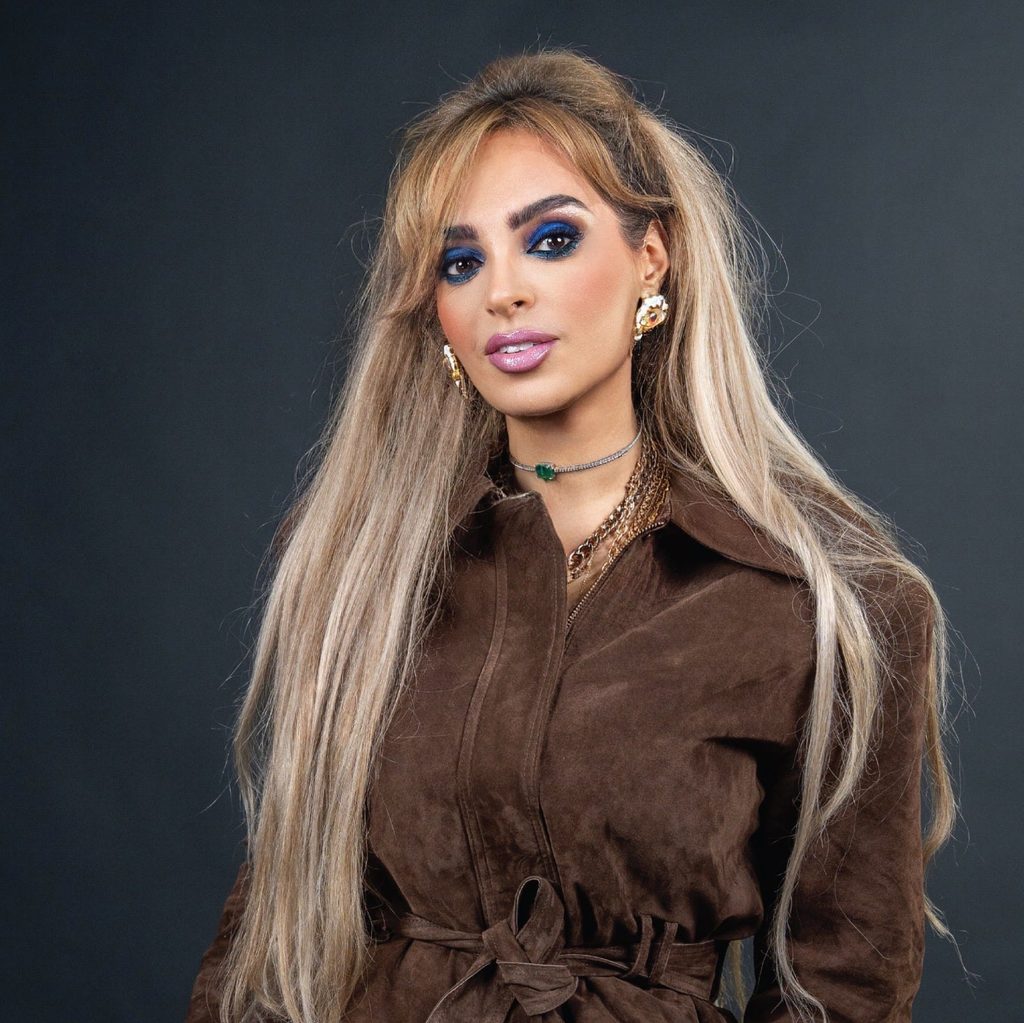
Senator Dr. Rasha Kelej
CEO of Merck Foundation