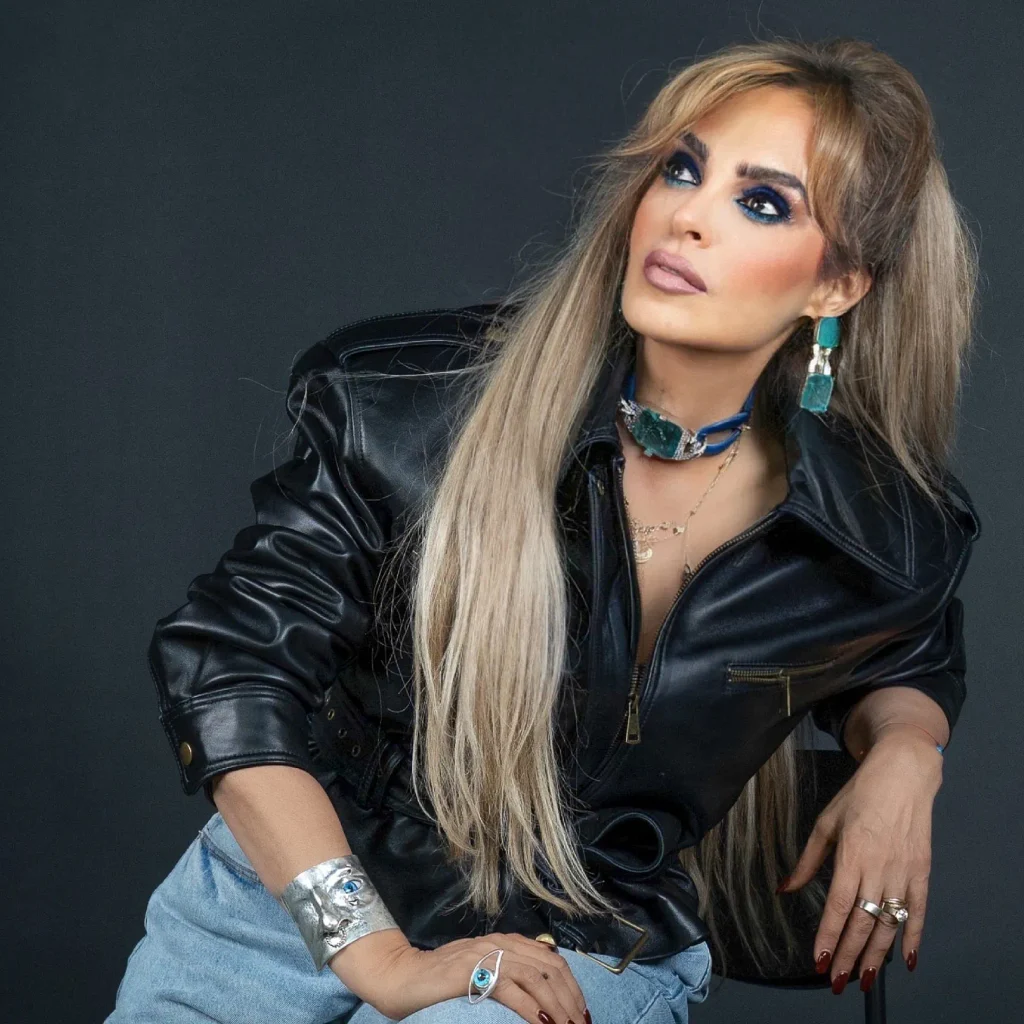
In fashion, layering creates depth, character, and individuality. I believe leadership works exactly the same way.
I have always loved fashion, and one of the things I find most fascinating about it is the art of layering.
A beautiful look is rarely about one extraordinary piece. It is about how different pieces, textures, structures, colors, and details are brought together. Each layer adds something, but none should overpower the whole.
Over the years, I have realized that this is also how I have built my leadership style.
I did not become the leader I am through one qualification, one position, one skill, or one experience. I built my leadership identity layer by layer.
And these are by no means all the layers. They are simply some of the layers I can identify today. I am still learning, evolving, adding, removing, and editing—and I expect to continue doing so for as long as I lead.
And perhaps this is one of the reasons my leadership journey has never fitted neatly into one conventional definition.
Leadership Is Not a Uniform
We sometimes speak about leadership as though there is a standard formula.
Be decisive.
Be strategic.
Communicate well.
Build a strong team.
Deliver results.
Of course, all of these matter.
But I believe great leadership is much more multidimensional.
Just as I would never expect one item of clothing to create an entire look, I would never expect one leadership quality to create an exceptional leader.
Knowledge without emotional intelligence can make leadership cold.
Confidence without humility can become arrogance.
Empathy without decisiveness can make leadership ineffective.
Creativity without discipline may produce ideas without results.
Ambition without integrity can become dangerous.
The power comes from how we layer these qualities together.
My First Layer: Knowledge and Professional Discipline
My professional journey gave me the foundation.
Knowledge, scientific thinking, discipline, preparation, attention to detail, and the ability to understand complex problems were important early layers of my leadership.
But I discovered very quickly that technical competence alone was not enough.
You can understand a problem perfectly and still fail to solve it if you cannot understand the people surrounding it.
That realization led me to another layer.
The Human Layer
Working across different countries, cultures, institutions, governments, and communities taught me something no textbook could fully teach me:
People do not respond only to strategies. They respond to people.
I learned to observe.
To listen.
To understand what is said—and sometimes what is deliberately left unsaid.
To recognize cultural differences.
To understand motivations and sensitivities.
To know when to speak, when to wait, when to push, and when to change direction.
This human layer became increasingly important as my responsibilities grew.
The Cultural Intelligence Layer
Working across Africa, Asia, and the rest of the world , and many different institutional environments added another dimension to my leadership.
I learned that what works brilliantly in one country may fail completely in another.
The same communication style cannot simply be copied from one culture to another.
The same partnership model cannot be imposed everywhere.
Leadership therefore requires adaptation without losing identity.
This distinction became fundamental to my leadership philosophy:
I can adapt my approach without compromising my values.
That is another form of layering.
The outer expression may change according to the environment, while the core remains intact.
The Creative Layer
Perhaps one of the most unusual layers in my leadership journey has been creativity.
My work gradually expanded beyond traditional organizational leadership into education, media, filmmaking, television, music production, Tv production , fashion design , social media, awareness campaigns, and storytelling.
I did not see these as unrelated activities.
I saw them as different instruments for raising awareness , building advocacy hence creating impact.
If a scientific report cannot reach a community, perhaps a song can.
If statistics cannot change an attitude, perhaps a film can.
If a traditional campaign cannot attract attention, perhaps fashion, art, or storytelling can.
This taught me an important leadership lesson:
Do not become so attached to the traditional tools of your profession that you forget the purpose you are trying to achieve.
The objective is not to protect the method.
The objective is to create impact.
Creativity became another layer in my leadership model.
The Political and Diplomatic Layer
Working with First Ladies , presidents , ministers , governments, institutions, policymakers, and leaders also taught me the importance of diplomacy.
But diplomacy, in my view, does not mean agreeing with everyone on everything .
It means understanding how to maintain relationships while remaining clear about your principles and guidelines.
This is where another layer became essential: the courage to say no.
Leadership sometimes requires you to make decisions that are not popular, convenient, or politically comfortable.
Over time, I learned that diplomacy and firmness are not opposites.
They can—and should—be layered together.
You can be respectful and firm.
Warm and decisive.
Diplomatic and principled.
Flexible in method and uncompromising in values.
The Layer of Observation and continues learning.
Observation has probably connected all the other layers of my leadership.
I have always learned by watching carefully.
I observe people.
I observe organizations.
I observe cultures.
I observe successes and failures—my own and those of others.
I observe what creates energy and what destroys it.
And importantly, I observe myself—my decisions, my reactions, and my progression day after day
And I try to convert those observations into lessons.
Experience alone does not necessarily make us wiser.
Experience that is observed, questioned, understood, and applied does.
This is how experience becomes wisdom.
And wisdom becomes another layer.
But wisdom should never become a reason to stop learning. For me, continuous learning is what keeps all the other layers evolving.
Even Personality Can Be Layered
I also believe we make a mistake when we believe leaders must have one dominant personality.
A leader does not have to choose between being strong or compassionate.
Serious or joyful.
Strategic or creative.
Elegant or powerful.
Disciplined or spontaneous.
These qualities can coexist.
In fact, some of the most interesting leadership identities are built from qualities that initially appear contradictory.
I can be extremely demanding about standards while deeply caring about people.
I can enjoy celebration while being intensely focused on performance.
I can appreciate fashion, beauty, music, and creativity while being rigorous about strategy, operations, measurement, and results.
I do not see these as contradictions.
I see them as layers that enrich my personality.
Together, they make my leadership more distinctive —and, I believe, more effective.
Knowing What Not to Layer
There is another lesson fashion teaches us.
Layering does not mean adding everything.
Too many layers can destroy the look.
Leadership is the same.
Maturity is not only knowing what to add. It is knowing what to remove.
With experience, I have become more selective about where I spend my time, which opportunities I accept, which relationships deserve investment, and which requests require a clear no.
Not every opportunity deserves another layer.
Sometimes the most sophisticated leadership decision is subtraction.
Remove unnecessary meetings.
Remove distractions.
Remove relationships that continuously consume energy without creating value to your organization.
Remove activities that no longer serve the mission.
Remove the need to please everyone.
Good layering requires editing. So does good leadership.
My Leadership Model Was Built, Not Inherited or Gifted
When I look at my leadership journey today, I do not see one defining moment that created my leadership style.
I see layers.
Early in my career, knowledge gave me confidence and power—even without authority.
Experience gave me perspective.
Observation gave me direction and wisdom.
Cultural exposure gave me adaptability.
Working with people at all levels gave me empathy.
Challenges gave me resilience and creativity.
Responsibility gave me discipline and consistency.
Diplomacy gave me patience.
Creativity gave me new ways to communicate and create lasting impact.
Success gave me confidence—but failure and disappointment gave me lessons that success alone could never provide. I learned that challenges are often opportunities in disguise.
And learning when to say no gave me clarity and direction.
None of these layers alone defines my leadership.
Their combination does.
And importantly, this is not the finished version of my leadership model.
The layers I describe here are only some of them—the ones I can recognize and articulate today.
I will continue layering. I will continue editing.
I will add new skills, perspectives, experiences, and perhaps entirely new dimensions that I cannot yet anticipate. And I will remove or reshape layers that no longer serve the leader I am becoming.
For me, leadership is not a finished identity.
It is a continuous work in progress.
Perhaps this is also why leadership becomes more interesting with age and experience.
We should not simply become older leaders.
We should become more layered leaders.
Your Leadership Signature
In fashion, two people can wear exactly the same pieces and somehow create completely different looks.
Leadership is no different.
Two leaders can attend the same university, hold similar positions, read the same books, and receive the same management training—and still lead completely differently.
Because leadership is not simply the collection of skills you possess.
It is the way you layer them.
Your experiences.
Your personality.
Your values.
Your failures.
Your cultural exposure.
Your emotional intelligence.
Your curiosity.
Your courage.
Your creativity.
Your judgment.
And ultimately, your character.
When these layers are consciously developed and thoughtfully combined, they create something that cannot easily be copied:
Your leadership signature.
And I believe this has been one of the most important contributors to my own success.
I never tried to become a copy of someone else’s definition of a leader.
I keep learning.
I keep observing.
I keep adapting.
I keep adding layers that make me better—and removing those that no longer serve my purpose.
And I know that the leader I am today will not be exactly the leader I will be five or ten years from now. There will be new experiences, new challenges, new lessons, and therefore new layers.
Because leadership, like great style, is not about wearing everything you have.
It is about knowing what to layer, what to leave out, and how and when to bring everything together in a way that is unmistakably your own.
And perhaps the real art of leadership is knowing that the layering is never truly finished.
Senator Dr. Rasha Kelej
CEO of Merck Foundation